
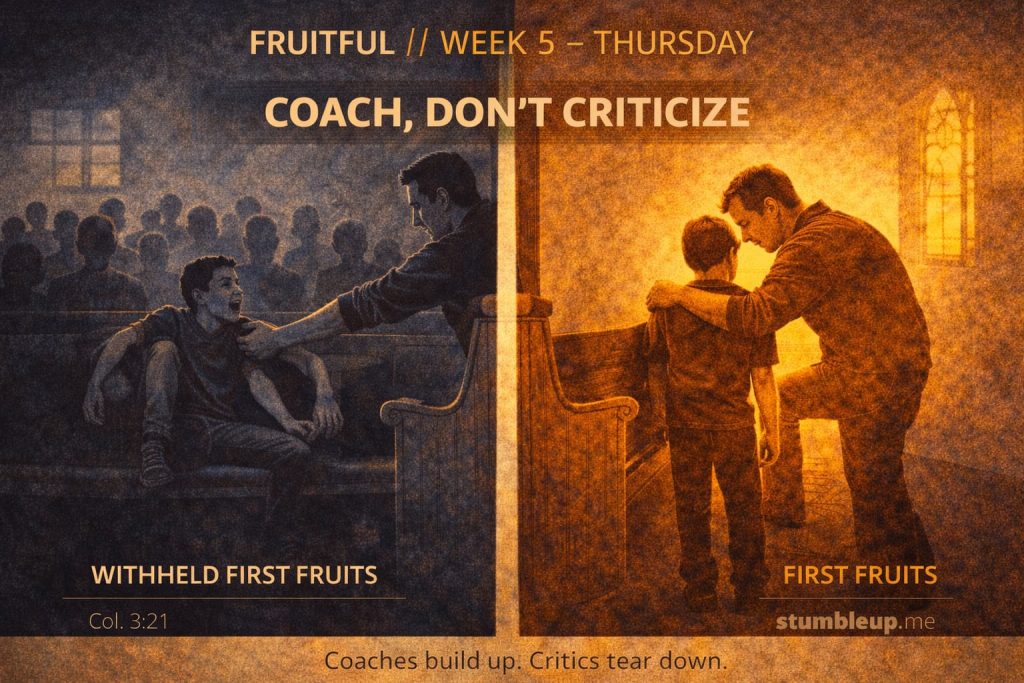
“Fathers, do not provoke your children, lest they become discouraged.”
Colossians 3:21 (ESV)
Brian, 45, is sitting in Sunday service trying to keep it together. He wants to worship. He wants his family to have one good hour in the week where everyone is present and nobody is a problem. Cole, his 15-year-old, has other plans.
Cole can’t keep still. He’s nudging his brother. He’s looking at his phone. His knee is bouncing. He’s not being defiant exactly; he’s just a 15-year-old whose attention span is losing a battle it didn’t prepare for. But Brian knows he’s old enough to know better. And that’s where the frustration tips from mild to personal.
The public correction feels justified. The arm-grab, the firm march toward the lobby, the look on Brian’s face that says “I am done,” it all feels like appropriate parenting in the moment. Let the embarrassment be the lesson. Let Cole feel the weight of it in front of everyone.
Discouraged. That’s the word Paul chose.
Not “annoyed.” Not “embarrassed.” Discouraged. As in, a kid who stops trying entirely because he has been provoked past the point of caring. That’s what’s on the table.
Brian pauses. Colossians 3:21 doesn’t show up like a billboard; it’s more like a quiet word from someone who knows better landing just in time. He taps Cole’s shoulder once. Leans over. “Walk with me.” No scene. No preview of what’s coming. Just two words and a direction.
In the hallway, Brian crouches down. He gets to eye level. No audience. No performance. He speaks plainly and without heat: “Your behavior in there is a reflection of you, and of our family. I know you know that. I also know you can do better than what you showed us back there. And I’m going to say that to you instead of assuming you don’t care, because I believe that you do.”
Cole nods. No argument. No eye roll. They walk back in. Together. Something has shifted; not because Brian was soft, but because he chose the harder thing. He brought his best version of himself, the invested father, not the embarrassed one, into a moment where his instincts were screaming otherwise.
Coaches vs. Critics — First Fruits in Discipline:
A coach sees who the player can become before the game is over. A critic evaluates what just happened and renders a verdict. Both can look like “parenting” from the outside. But only one of them builds something lasting in a kid’s soul.
First fruits to your teenager is your belief in him, delivered to him before he’s earned it. That’s what it costs you. And that’s what it builds in him.
Heart Check — Thursday:
- When my child disappoints me in public, what’s my first move?
- Do my corrections communicate belief in my kid’s potential, or just my frustration?
- Is the goal of discipline to punish, or to build?
- Does my son or daughter walk away from hard conversations feeling coached, or crushed?
Coaches build up. Critics tear down. Your kid needs a coach. Be that, especially when it costs you something to get there.
Leave a Reply